
Shaping a Thriving Community


Thank you for Subscribing to Gov Business Review Weekly Brief
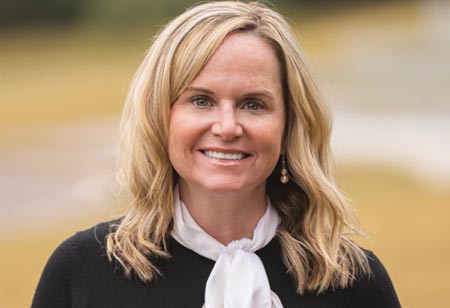
In an interview with Govt Business Review, Natalie Zeigler, City Administrator of the City of Goose Creek, discusses the challenges and emerging trends shaping municipal governance today and shares her insights on leading a fast-growing community with intention, innovation, and collaboration.
A seasoned local government professional, Zeigler’s career has spanned small towns and full-service cities, giving her a deep understanding of how municipal systems function at every scale. Her leadership is grounded in community building, thoughtful planning, and a commitment to improving daily life for residents. From modernizing city operations to guiding sustainable development, she brings a steady, pragmatic approach that prioritizes teamwork, long-term vision, and the belief that meaningful progress comes from empowering both staff and community. My Journey into Local Government My spark for public service was lit early. In fifth grade, watching Ann Richards campaign for Governor of Texas felt like watching possibility take shape. It inspired a level of enthusiasm that led to a homemade scrapbook filled with newspaper clippings, an early sign that government had captured my curiosity before I understood policy or party lines. Academic life reinforced that interest. Political Science studies initially pointed me toward law school, but a formative internship at the U.S. Attorney’s Office revealed something important. While public service was fulfilling, prosecution was not the right avenue for me. Graduate school brought a turning point. A single course in local government opened the door to a profession where decisions directly shape everyday life. That realization made the direction clear. My first leadership role came in a small town of roughly 2,800 residents. Small-town management requires wearing every hat, from City Clerk and HR Director to Planning Director and Administrator. Those early years built a deep understanding of how every function connects and how vital professional management is to small communities. A decade-long role in a full-service city of 8,000 residents followed, expanding that experience with broader teams, more complex infrastructure, and deeper community engagement. For the past five years, my focus has been on Goose Creek, a fast-growing community of 50,000 residents. Here, my responsibilities include overseeing daily operations and turning the strategic goals of the Mayor and City Council into reality. Every day brings new challenges, new opportunities, and new ways to strengthen the momentum the community has built. Managing Growth While Preserving Community Character Goose Creek is unique in its history. Incorporated in 1961, the City grew from suburban expansion rather than around a traditional town center. Although its neighborhoods offered strong amenities, the absence of a shared gathering place made it difficult for residents to feel connected to one another. That has changed significantly. A new community park now serves as a central hub, bringing families from all neighborhoods into one shared space. In 2024, an amphitheater project added another venue for events, performances, and celebrations, giving the community additional places to gather.Leadership in local government is never about the spotlight. It is about steady guidance, shared credit, and creating space for the entire team to succeed.
I agree We use cookies on this website to enhance your user experience. By clicking any link on this page you are giving your consent for us to set cookies. More info

However, if you would like to share the information in this article, you may use the link below: